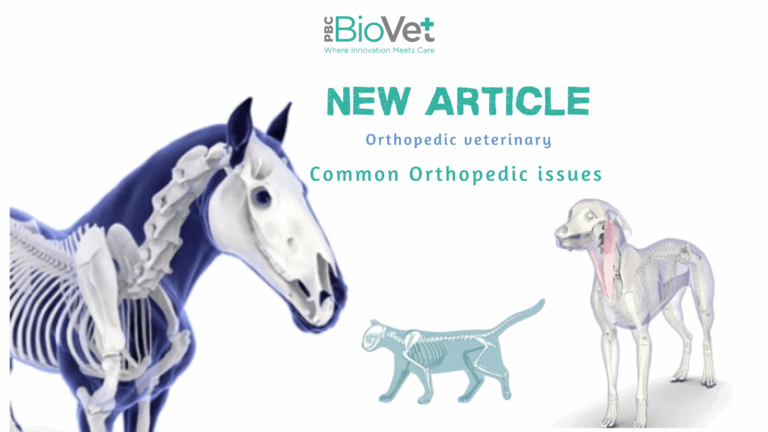
Common Orthopedic Issues in Veterinary Medicine
White Paper: Common Orthopedic Issues in Veterinary Medicine Introduction Orthopedic disorders are among the most prevalent health concerns in veterinary medicine, affecting companion animals, equine patients, and livestock. These conditions range from congenital deformities to acquired injuries and degenerative diseases, significantly impacting an animal’s mobility and quality of life. This white paper explores the most common orthopedic issues seen in veterinary practice, their causes, diagnostic approaches, and treatment options. 1. Fractures Causes and Risk Factors: Fractures occur due to trauma (e.g., vehicle accidents, falls) or underlying bone weaknesses such as metabolic bone disease or neoplasia. Types of Fractures: Diagnosis and Treatment: 2. Osteoarthritis (Degenerative Joint Disease) Causes and Risk Factors: Osteoarthritis (OA) is a progressive, degenerative disease resulting from joint wear and tear, trauma, or developmental abnormalities. Large breeds, overweight animals, and aging patients are at higher risk. Symptoms: Diagnosis and Treatment: 3. Hip Dysplasia Causes and Risk Factors: A genetic condition primarily affecting large dog breeds, hip dysplasia results from improper hip joint development, leading to instability and eventual arthritis. Symptoms: Diagnosis and Treatment: 4. Cruciate Ligament Rupture (ACL Injury) Causes and Risk Factors: Rupture of the cranial cruciate ligament (CCL) in dogs is a common cause of hind limb lameness, often resulting from obesity, genetic predisposition, or high-impact activities. Symptoms: Diagnosis and Treatment: 5. Luxating Patella Causes and Risk Factors: A common orthopedic issue in small dog breeds, patellar luxation occurs when the kneecap shifts out of its normal position due to congenital malformations or trauma. Symptoms: Diagnosis and Treatment: 6. Elbow and Shoulder Dysplasia Causes and Risk Factors: Developmental abnormalities in the elbow and shoulder joints, often hereditary, lead to joint instability and degeneration. Symptoms: Diagnosis and Treatment: 7. Intervertebral Disc Disease (IVDD) Causes and Risk Factors: IVDD occurs when spinal discs degenerate or herniate, compressing the spinal cord. It is common in chondrodystrophic breeds (e.g., Dachshunds, French Bulldogs). Symptoms: Diagnosis and Treatment: Conclusion Orthopedic conditions in veterinary medicine can significantly impact an animal’s quality of life. Early diagnosis and appropriate intervention are crucial to successful management. Advances in diagnostic imaging, surgical techniques, and biomaterials continue to improve outcomes in veterinary orthopedics. By understanding these common orthopedic issues, veterinarians can offer more effective, personalized treatment plans to enhance mobility and overall well-being in their patients. #VeterinaryOrthopedics #AnimalHealth #Boneadhesive #FractureRepair #JointCare #Osteoarthritis #VeterinarySurgery
PBC Biomed OTA Symposium – Strengthening the Bond: Modern Biomaterials for Fracture Fixation and Bone Regeneration.
We are delighted to announce that we will be continuing our ‘Strengthening the Bond’ education series at the Orthopaedic Trauma Association meeting in Montreal this week. Strengthening the Bond: Modern Biomaterials for Fracture Fixation and Bone Regeneration. Our global panel of surgeon advisors will discuss current hashtag#Biomaterials and their challenges, as well as plans for the first human implantation of OsStic®, a hashtag#Breakthrough Bio-Adhesive bone void filler technology. Speaker panel is as below: – Peter Giannoudis – John Tracy Watson – Hassan Mir, MD, MBA – Thomas A. (Toney) Russell MD The session will take place on Friday 23rd October at 12:45pm in room 514ABC. See below for further information – we look forward to seeing you there! #OTA2024 #strengtheningthebond #industrylunchseries #pbcbiomed #acceleratingmedicalinnovation #biomimeticinnovations

DTIF Project Consortium Progress Meeting
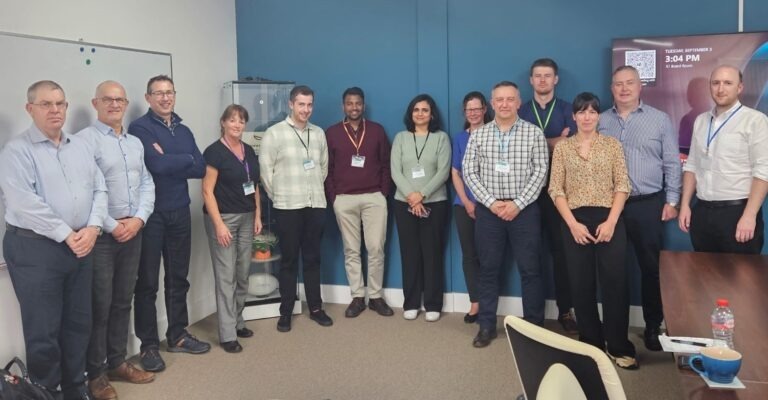
It was fantastic to welcome the Enterprise Ireland #DTIF consortium team to our Shannon Headquarters at the start of September for a project progress meeting. Thank you to Nicholas Dunne and the DCU postgraduate team, the Dolmen Design & Innovation team, as well as Jackie FitzGerald of Enterprise Ireland for making the trip! #DTIF #disruptivetechnology #OsStic #development #researchanddevelopment #enterpriseireland #acceleratingmedicalinnovation
Collaboration by RCSI, MTU and PBC for Degenerative Bone Disease Solution
RCSI, MTU and PBC BioMed to collaborate on degenerative bone disease solution RCSI University of Medicine and Health Sciences, Munster Technological University and Irish SME, PBC BioMed are to collaborate on a medical device to address the degenerative bone disease, avascular necrosis. The project is supported by an Enterprise Ireland Innovation Partnership and will develop a bone scaffold that will support the re-growth and regeneration of the affected bone structure. The collaboration is based on patents held by PBC BioMed, tissue engineering and regenerative medicine expertise from the project lead in RCSI, Dr Orlaith Brennan and cell biology expertise in MTU from Dr Aleksandra Augustyniak. The current preferred treatment for avascular necrosis are bone grafts taken from the patient themselves. These can be painful, and the donor site can experience bone morbidity. This project is based on the development of scaffolds that are compatible with the body and have a similar microporous structure to bone. The scaffolds which contain compounds that stimulate development of new bone, will be placed at the site of the necrosis and as new bone formation is taking place, the scaffold slowly disintegrates, leaving behind strong, new bone. Dr Orlaith Brennan, RCSI said: This project offers an exciting opportunity for RCSI to collaborate with PBC BioMed and MTU to deliver patient-centred research which addresses a key international health challenge. The interest in tissue engineering and regenerative medicine as a viable alternative to bone grafts has been steadily gaining momentum and we look forward to developing this technology further. Dr Gerard Insley, Chief Scientific Officer, PBC Biomed, said ‘Avascular Necrosis is a silent bone disease which can lead to early joint replacement. This can be avoided or delayed and joint preservation achieved by addressing the biology of the diseased area. Extending the life of a joint by over five years using specifically engineered scaffolds through the creation of a biological chamber can enhance healing and bone repair’. Dr Aleksandra Augustyniak, MTU said: We’re really excited to secure this project, it is the First Innovation Partnership signed off as MTU so it’s a really historic moment for us. We’ve worked with PBC Biomed for some time and it’s a real step forward to get this substantial project funded.